When Adolescence started making waves on Netflix, I wasn't surprised by the reaction. Four episodes, each filmed in a single take, about a 13-year-old boy accused of murdering a classmate. It's formally extraordinary — and emotionally devastating in the way that good art about hard truths usually is.
What struck me most wasn't the filmmaking, though. It was the response. People couldn't stop talking about it. Not just as a TV show — as a mirror. As a this is actually happening kind of recognition.
I've been watching this for nearly a decade.
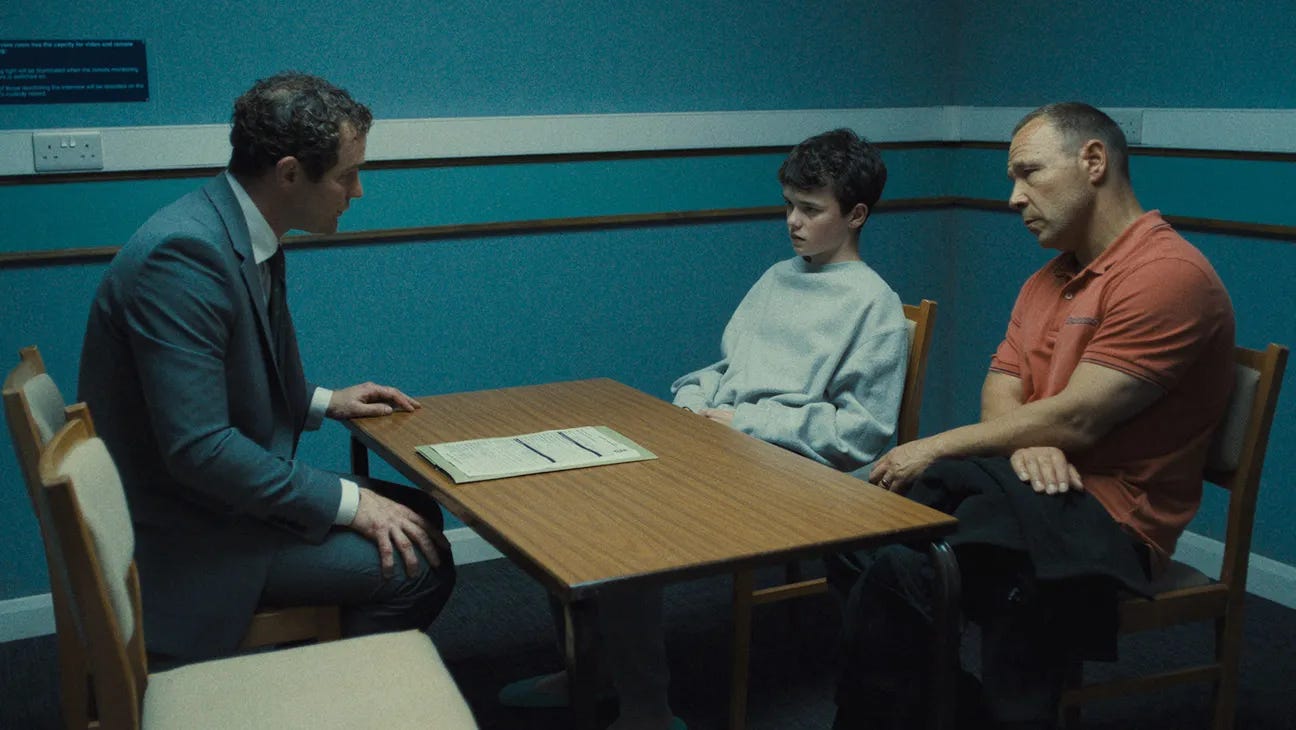
Still from Adolescence (Netflix, 2025)
Across my nearly ten years in education — as a teacher, administrator, school counselor, and principal — I've watched boys struggle in ways that don't always have obvious explanations. Not every struggle ends in tragedy. Most of them end quietly: a boy who stops trying, a kid who learns to perform toughness because it's safer than honesty, a teenager who accumulates pain with no outlet and no one to talk to.
The questions the show raises — about online radicalization, about what boys absorb from the internet, about what happens when no one is paying attention — are questions I've been sitting with for years. And I finally decided to write down what I know.
What I put together — and why
From Boys to Better Men is a practical guide for parents, caregivers, and educators who want to help the boys in their lives grow into emotionally healthy, empathetic, accountable men. It's grounded in research, but it's also grounded in real conversations — the weekly group I ran for high school boys, the individual counseling sessions, the workshops, the quiet moments in a hallway where something finally got said out loud.
I've given a lot of talks on this subject. I've watched adults nod along and then not know what to do when they get home. So I tried to write a guide that closes that gap — not just why this matters, but what to actually say, and when.
The guide covers five areas.
Starting with the vocabulary
Before anything else, we have to be speaking the same language. Terms like toxic masculinity and feminism get so distorted in online spaces that adults often avoid them entirely — which means they're ceding the definition to the loudest voices in the room.
I open the guide with a brief glossary: not to score political points, but to give adults a shared foundation for these conversations. If we can't agree on what we're talking about, we can't move forward together.
How boys learn what it means to be a man
This is the piece I find most useful to work through with people. Most of us absorbed our ideas about masculinity without noticing. That's how socialization works — it's slow, ambient, and largely invisible until something forces you to examine it.
In this section, I walk through an exercise I've run dozens of times with people of all ages. It consistently surprises people. The goal isn't shame — it's awareness. Once you can see how the messages got in, you can start to be more intentional about what comes next.
One thing that keeps showing up: boys who've been taught that anger is the one emotion they're allowed to express will start misreading everything else — grief, disappointment, embarrassment, guilt — as anger. The consequences of that misreading are everywhere. Understanding it is the first step toward something different.
The specific problems — and what to do about them
This is where I get practical. Three patterns in particular keep showing up in boys' lives, and I try to address each with specific language and strategies.
Desensitization to harmful content. The meme economy has made it easy to dismiss a lot of content as "just a joke." But that's exactly how normalization works — through repetition, through humor, through the slow drift toward content that would have been unacceptable a year ago. Boys need adults who can name this without panicking, and who can help them develop a more critical eye.
The underprotected online life. Jonathan Haidt makes the case in The Anxious Generation that we're overprotecting children in the physical world and underprotecting them in the virtual one. For boys especially, this matters. The question isn't if they'll encounter harmful content — it's whether they'll have the tools to process it when they do.
Emotional intelligence. Boys who are never taught to identify, honor, and work through their emotions don't stop having emotions. They just route everything through the one channel that's been approved: anger. Teaching boys to be more fluent in their emotional lives isn't soft. It's one of the most practical things an adult can do.
Critical media literacy
This section grew out of something I actually did for my own son. As he got older and started asking to watch R-rated movies and play M-rated games, I put together a curated list of documentaries and other content designed to help him develop a more critical lens.
I share that list in the guide — specific titles, links, and what I was hoping each one would open up. Going through this kind of content together gives boys a framework for thinking about how women are represented, how narratives position characters, and what they're being asked to accept as normal. Done well, it turns passive consumption into active thinking.
The last section: phrases for when you don't know what to say
I end the guide with something that might seem small but that adults consistently tell me is the most useful part: a list of phrases to use when you don't have the answer.
Because here's what I've learned: one of the most powerful things an adult can model for a boy is not having all the answers — and being okay with it. Saying "I don't know, but let's think about it together" is not a failure of authority. For many boys, it's the first time they've seen someone do that.
Get the guide — and keep the conversation going
From Boys to Better Men is available for free when you sign up through the link below. You'll also get occasional updates on new resources, research, and writing on boys' development.
If you're a counselor, SEL coordinator, administrator, or parent who wants to go deeper — or if you're trying to figure out how to bring this work into your school — I offer one-on-one coaching and school partnership conversations. The work is specific to your context, because that's the only way it actually helps.
You can also browse the full library of resources at raisingbettermen.com/books/, including the workbook Becoming Better Men for older boys who want to do some of this work themselves, and Modeling Masculinity — a guide written specifically for the fathers and mentors in boys' lives.
The show was a mirror. The question is what we do now that we've seen ourselves in it.